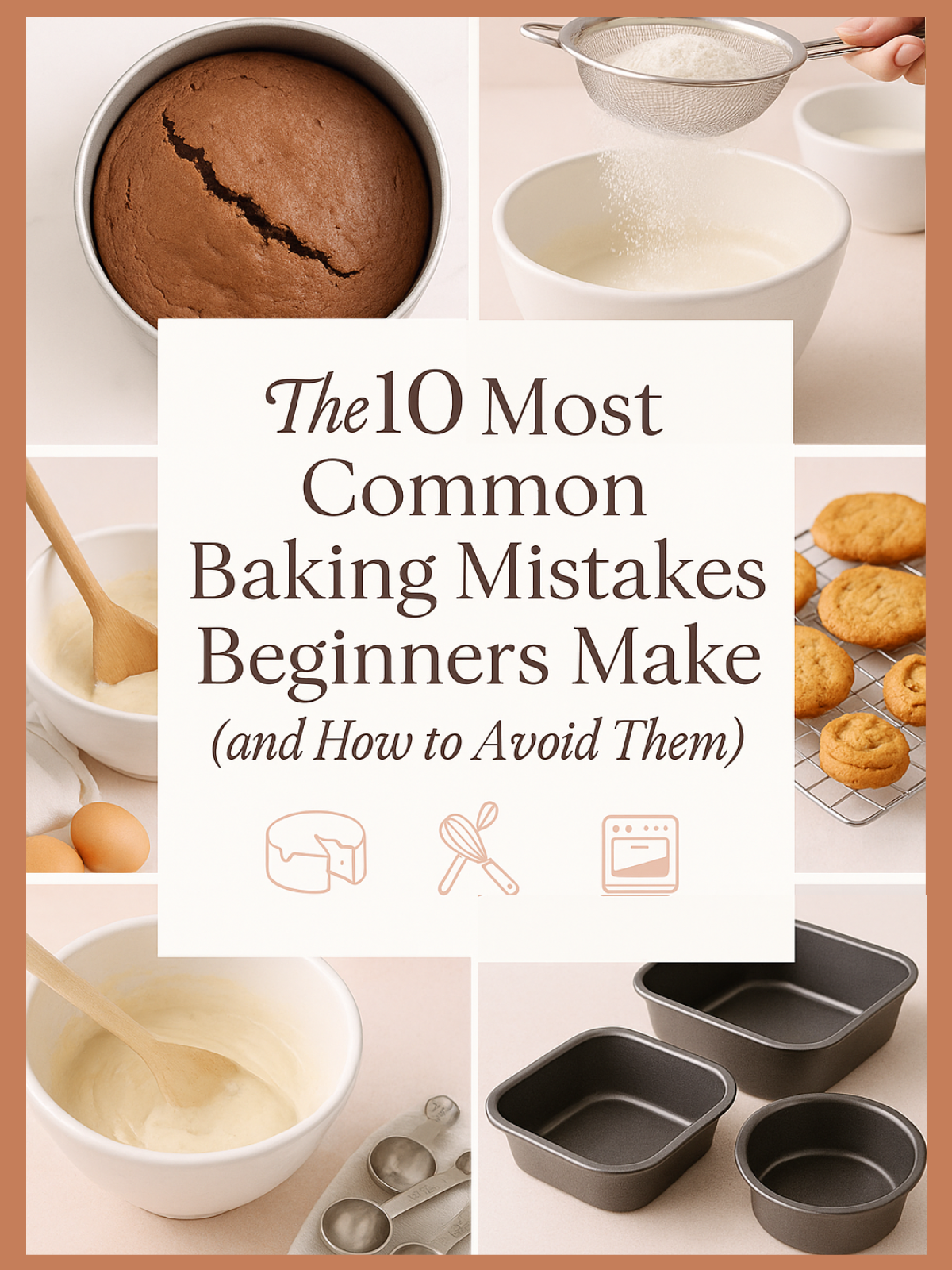

You’ve followed the recipe, preheated the oven, and waited patiently for the magic to happen. The aroma fills your kitchen, the cake rises beautifully… and then: disaster. By the time you take it out, your cake has a sad, sunken middle. This article “Why Did My Cake Sink? 5 Common Baking Mistakes Beginners Must Know” will help answer all your questions, plus 15 ideas to use up the cake if it’s a little too sunken to use as originally planned!
If you’re a beginner baker, you’re not alone. One of the most common baking mistakes beginners face is the dreaded sinking cake. The good news? It’s fixable and preventable once you know why cake sinks in the first place.
In this guide, we’ll walk through five common reasons cakes collapse, plus simple tips to ensure your bakes rise high and stay there.

1. Opening the Oven Door Too Early
The problem:
When you open the oven door before the cake has set, you let out heat and disrupt the baking process. Your cake’s structure hasn’t yet stabilized, so that sudden drop in temperature can cause it to fall in the middle.
Why it happens:
As beginners, it’s tempting to peek, especially if you’re proud of how things are looking. But cakes are a bit shy; they don’t like drafts.
The fix:
- Avoid opening the oven door for at least the first two-thirds of the bake time.
- Use the oven light and window instead of opening the door.
- If you must check earlier, do it quickly and gently.
2. Underbaking the Cake
The problem:
If your cake looks done on the outside but hasn’t fully set in the center, the uncooked middle will collapse as it cools.
Why it happens:
Many beginners rely solely on the timer, but oven temperatures can vary by as much as 20°C (68°F). Even if you followed the recipe exactly, your cake might need a little extra time.
The fix:
- Use a skewer or toothpick to check doneness, if it comes out with wet batter, keep baking.
- Invest in an oven thermometer to make sure your oven is actually at the temperature you set.
- Follow the “golden clues”: edges pulling away slightly from the tin, the top springing back when touched, and that toothpick coming out clean or with just a few crumbs.
3. Overmixing the Batter
The problem:
When you mix too much, you overwork the gluten in the flour. This can make cakes dense, chewy, and prone to collapsing after baking.
Why it happens:
Beginners often think “more mixing = smoother batter = better cake.” In reality, the air you’ve worked in will escape too quickly during baking, leaving a sunken center.
The fix:
- Once you’ve added the flour, mix only until combined: no streaks of dry flour should remain, but don’t keep going for extra smoothness.
- Use a spatula instead of a whisk for the final mixing stage.
- For light cakes (like sponges), fold ingredients gently to keep the air bubbles intact.
4. Incorrect Leavening Amounts
The problem:
Too much or too little baking powder or baking soda can ruin the structure.
- Too much: the cake rises rapidly, then collapses under its own weight.
- Too little: the cake won’t rise enough and can end up dense.
Why it happens:
It’s easy to mis-measure especially when using teaspoons that aren’t level. Some beginners also confuse baking powder with baking soda (they’re not interchangeable).
The fix:
- Always level off your measuring spoon with a flat edge.
- Follow the recipe exactly; baking is a science.
- Store baking powder and baking soda in airtight containers and replace every 6–12 months. Stale leavening agents lose their power.
- If in doubt, test baking powder: mix 1 tsp with hot water. If it bubbles, it’s good to use.
5. Not Cooling the Cake Properly
The problem:
Removing the cake from the tin too early or letting it cool in a drafty spot can cause it to sink.
Why it happens:
The structure of a cake continues to set as it cools. Moving it too soon can cause collapse, especially in delicate cakes.
The fix:
- Let the cake cool in its tin for 10–15 minutes before removing.
- Place it on a wire rack in a spot free from cold drafts.
- If baking in winter, keep cakes away from open windows or fans while cooling.
Quick Reference: How to Prevent a Sinking Cake
Here’s a handy checklist for your next bake:
- ✅ Don’t open the oven door too soon.
- ✅ Check doneness with a skewer/toothpick.
- ✅ Mix just enough—don’t overdo it.
- ✅ Measure leavening agents accurately.
- ✅ Cool cakes gently and gradually.
What To Do If Your Cake Has Already Sunk
All is not lost! A sunken cake can still be delicious. Here are a few rescue ideas:
- Turn it into a trifle: Layer cubes of cake with whipped cream, custard, and fruit.
- Frost strategically: Level the top and cover with buttercream or ganache.
- Serve warm: Call it a “pudding cake” and top with ice cream—no one will complain.
Remember, even professional bakers have off days. Each sunken cake is just one more lesson learned.
Why Did My Cake Sink: Final Thoughts
Baking is part science, part art, and all about practice. The more you bake, the more you’ll notice patterns, trust your instincts, and avoid common baking mistakes beginners often make.
So the next time you’re wondering why cake sinks, you’ll know exactly what to check—and you’ll be ready to whip up a perfectly risen, picture-worthy cake.
And here’s the best part: even if it’s not perfect, it’s still cake. Hopefully this article “Why Did My Cake Sink? 5 Common Baking Mistakes Beginners Must Know” has helped you to troubleshoot your sinking cake so that it doesn’t happen again! And if it does, know that we have all been there, and the cake is totally salvageable – try these Cherry Cake Jars!
How to Use Up Cake that has Sunk
Okay, so the cake didn’t quite work out as planned, but does that mean throwing it away? Absolutely not! I hate food waste, so here are some ideas to use up the cake, as it will still be delicious, even if it can’t be hidden with frosting (although this is a solid, and easy option).
If your cake has sunk and isn’t fit for its original celebration purpose, you can absolutely repurpose it into something delicious — in fact, some of these uses might even be more popular than the original cake.
Here are 15 ideas:
1. Cake Pops
- Crumble the cake, mix with frosting, shape into balls, dip in chocolate.
- Great for parties and freezer-friendly.
2. Cake Trifles
- Layer cake chunks with custard, cream, fruit, or pudding in a glass dish for an easy showstopper.
3. Cake Parfaits in Jars
- Same idea as a trifle, but served in mason jars for grab-and-go desserts.
4. Cake Crumble Ice Cream Topping
- Toast crumbled cake in the oven and use it as a topping for ice cream or yogurt.
5. Cake Bread Pudding
- Swap bread for cake in your favorite bread pudding recipe — rich and indulgent.
6. Cake Milkshakes
- Blend chunks of cake into milkshakes for an over-the-top dessert drink.
7. Cake Tiramisu
- Use cake instead of ladyfingers for a twist on the classic Italian dessert.
8. Cake Energy Balls
- Mix cake crumbs with nut butter, a little honey, and oats for quick bites.
9. Cake Crust Cheesecake Base
- Dry the cake, crumble it finely, and press into a cheesecake tin instead of graham crackers.
10. Cake Doughnuts (Baked or Fried)
- Turn cake crumbs into a doughnut batter for something unique.
11. Cake French Toast
- Slice firm cake and dip in egg custard, then fry like French toast.
12. Cake Crumble Bars
- Press crumbled cake into a baking tin, add a jam or fruit layer, and top with more crumbs before baking.
13. Cake Layer in Ice Cream Sandwiches
- Use cake slices instead of cookies for a soft, decadent twist.
14. Cake Mousse Cups
- Layer chocolate mousse with cake crumbs for a fancy, no-bake dessert.
15. Cake Granola
- Bake small cake chunks at a low temperature until crunchy; mix with nuts, seeds, and dried fruit.
Further Reading after “Why Did My Cake Sink? 5 Common Baking Mistakes Beginners Must Know”
For further reference, more tips and advice, check out my other ‘common baking mistakes’ pages, plus my FREE Beginners Baking Guide.
For videos and baking inspiration, head on over to my Instagram.